
Chapter 1
Lean Manufacturing Principles for Enhance Efficiency of Human Resources: A Study in the Electronics Manufacturing Industry of Kerala
- Joshy M (Research Scholar, University of Kerala)
- Dr.Angelo Mathew (Asst. Professor, Department of Personnel Management , Loyola College of Social Science)
- ISBN
- 978-93-340-5069-1
- Published
- 10 July 2026
- Accesses
- 206 views · 95 downloads
- Reading time
- ~30 min
Abstract
Lean Manufacturing (LM) has evolved from a set of process-improvement tools into a socio-technical philosophy that emphasizes human efficiency as a key driver of operational excellence. Global evidence shows that LM’s true strength lies in leveraging employees’ intelligence, creativity, and problem-solving abilities. In this context, Kerala’s electronics manufacturing offers a compelling case: despite exceptional human development indicators, including high literacy and a strong supply of technically skilled labour, LM adoption remains limited, fragmented, and informal. This paradox prompts critical questions about why LM is weakly institutionalized in a human-capital-rich region like Kerala and the extent to which even partial LM implementation can enhance manpower efficiency. This research investigates how Lean Manufacturing (LM) principles enhance manpower efficiency—defined as the optimal use of employees’ skills, knowledge, time, and effort to achieve organizational goals with minimal waste while sustaining productivity, quality, adaptability, and engagement—in Kerala’s electronics manufacturing industry. Although policy initiatives such as the Kerala Industrial Policy (2023) and the MSME Competitive Lean Scheme (2024) aim to promote LM, weak and unstructured firm-level engagement highlights the need for a focused examination of LM–manpower efficiency dynamics in the region, with insights transferable to other emerging economies.
Keywords: Lean Manufacturing, Human Resource Efficiency, Workforce Productivity, Electronics Manufacturing Industry, Kerala; Socio-Technical Systems, Operational Excellence
Full text
INTRODUCTION
Lean Manufacturing (LM) is increasingly recognized not merely as a system for process optimization, but as a human-centered production philosophy in which the efficiency of human resources determines the depth and sustainability of lean outcomes. While classical lean literature emphasized waste elimination through tools such as Just-in-Time, Value Stream Mapping, and standardized work, contemporary theoretical developments reposition Lean Manufacturing principles as mechanisms that structure human effort, decision-making, and learning within production systems. Empirical studies across manufacturing sectors demonstrate that firms aligning lean principles with human resource practices report statistically significant gains in labor productivity (15–35%), reductions in human-error-induced defects (20–40%), and improvements in workforce utilization efficiency exceeding 25%. These findings reinforce the emerging theoretical consensus that manpower efficiency—defined as the optimal deployment of employees’ skills, time, and problem-solving capacity with minimal non-value-adding effort—is not a by-product of lean implementation, but a direct outcome of how lean principles are operationalized at the human level.
In the context of electronics manufacturing, the relationship between Lean Manufacturing principles and human resource efficiency becomes particularly critical. Electronics production is characterized by high process complexity, short product life cycles, precision-sensitive assembly operations, and a strong dependence on skilled human intervention. Studies indicate that in electronics manufacturing environments, up to 60% of operational inefficiencies originate from human-system mismatches such as inadequate skill utilization, weak standardization adherence, insufficient training, and low employee involvement in improvement activities. Despite this, existing lean research in electronics manufacturing has predominantly focused on tool effectiveness, throughput enhancement, and defect reduction, with limited attention to principle-wise human efficiency outcomes. Moreover, quantitative models often rely on crisp indicators that fail to capture the ambiguity, subjectivity, and contextual variability inherent in human resource performance, thereby constraining theoretical advancement in lean–HR integration.
Kerala’s electronics manufacturing industry provides a distinctive empirical setting to examine this gap between lean principles and manpower efficiency. The state exhibits some of the strongest human development indicators in India, including high literacy rates, a technically educated workforce, and a long-standing public-sector manufacturing base alongside emerging private electronics firms. Paradoxically, firm-level evidence suggests that Lean Manufacturing adoption in Kerala’s electronics sector remains partial, informal, and weakly institutionalized, with implementation largely confined to isolated practices such as 5S, visual controls, or sporadic Kaizen events. Preliminary industry assessments indicate that manpower inefficiencies—manifested through underutilized technical skills, rework rates ranging from 20–30%, and inconsistent standardization compliance—persist despite favorable human capital conditions. This contradiction challenges prevailing lean diffusion theories and raises a critical research question: to what extent can Lean Manufacturing principles, even when partially implemented, enhance the efficiency of human resources in a human-capital-rich but lean-immature electronics manufacturing ecosystem?
Addressing this question, the present study makes a focused theoretical and empirical contribution by explicitly examining how Lean Manufacturing principles enhance human resource efficiency in the electronics manufacturing industry of Kerala. Unlike prior studies that treat human factors as supporting variables, this research positions manpower efficiency as the central analytical construct and evaluates its relationship with lean principles through human-centric dimensions such as skill utilization, leadership support, training intensity, employee involvement, Kaizen participation, cultural readiness, and standardized work practices. To rigorously quantify subjective expert judgments and manage uncertainty inherent in human performance assessment, the study employs a Fuzzy Analytic Hierarchy Process (Fuzzy AHP) framework. By translating linguistic evaluations into weighted fuzzy scores, the study provides principle-wise measurement of human resource efficiency contributions, thereby extending lean manufacturing theory from a process-oriented paradigm to a socio-technical efficiency framework. The findings are expected to offer theoretically grounded insights into how lean principles function as enablers of workforce efficiency and to inform managerial and policy-level strategies for strengthening lean implementation in electronics manufacturing contexts similar to Kerala.
LITERATURE REVIEW
2.1 Evolution of Lean Manufacturing: From Process Optimization to Human-Centric Systems
Lean Manufacturing (LM) originated from the Toyota Production System and was initially conceptualized as a set of techniques aimed at eliminating non-value-adding activities, reducing inventories, and improving process flow (Womack, Jones, & Roos, 1990; Womack & Jones, 1996). Early empirical studies emphasized operational metrics such as cycle time reduction, throughput improvement, and cost efficiency, often treating labor as a passive production input. However, subsequent theoretical developments reframed LM as a socio-technical system in which human resources play a decisive role in sustaining performance improvements (Liker, 2004; Shah & Ward, 2007). This shift was driven by empirical evidence showing that lean initiatives frequently fail when workforce engagement, training, and leadership alignment are weak, even when technical tools are properly deployed.
Contemporary lean theory increasingly recognizes Respect for People and Lean Culture as foundational principles rather than supplementary elements. Studies report that firms embedding human-centric lean practices achieve significantly higher performance stability, with productivity gains ranging between 15–35% and defect reductions exceeding 25% compared to tool-centric implementations (Bhamu & Sangwan, 2014; Tortorella et al., 2020). These findings underscore the theoretical transition of LM from a process-dominant paradigm to a system in which manpower efficiency—defined by optimal utilization of skills, knowledge, time, and effort—emerges as a central outcome of lean principles rather than a secondary consequence.
2.2 Lean Manufacturing Principles and Human Resource Efficiency
The core principles of Lean Manufacturing—Value, Value Stream, Flow, Pull, and Perfection—have been extensively examined in manufacturing literature, with later studies explicitly integrating Respect for People and Lean Culture as enabling principles (Hines, Holweg, & Rich, 2004; Liker & Convis, 2012). While these principles are theoretically interdependent, empirical research often treats them as technical constructs, resulting in limited understanding of how each principle influences human resource efficiency. For instance, value identification is frequently operationalized in terms of customer requirements and process cost, with minimal attention to the role of employee cognition and decision-making in value creation.
Human resource efficiency within lean systems has been associated with factors such as skill utilization, standardized work adherence, employee involvement, leadership support, and continuous improvement participation (Shah & Ward, 2007; Netland, 2016). Empirical studies indicate that effective lean implementation can improve labor utilization rates by 20–30% and reduce rework hours by up to 40%, primarily through structured training, cross-functional teamwork, and problem-solving routines (Poksinska, Swartling, & Drotz, 2013). However, most studies assess HR efficiency as an aggregated outcome, without decomposing its contribution across individual lean principles. As a result, principle-wise understanding of manpower efficiency remains theoretically underdeveloped, particularly in complex manufacturing environments such as electronics.
2.3 Lean Manufacturing and Human Resources in Electronics Manufacturing
Electronics manufacturing is characterized by high product variety, short life cycles, precision-intensive operations, and strong dependence on skilled human intervention. Studies estimate that human-related factors account for nearly 50–60% of quality deviations and productivity losses in electronics assembly lines, particularly in soldering, testing, and inspection processes (Kumar & Tamilselvan, 2019; Jasti & Kodali, 2015). Lean Manufacturing has therefore been widely promoted in the electronics sector to address variability, defects, and responsiveness challenges.
Despite this relevance, existing lean research in electronics manufacturing has largely focused on tool deployment—such as Value Stream Mapping, Kanban systems, and cellular layouts—rather than on human resource efficiency outcomes. Empirical studies report improvements in lead time and defect rates, but provide limited evidence on how lean principles enhance skill utilization, employee autonomy, or learning capability (Jasti & Kodali, 2014). Moreover, workforce-related lean benefits are often inferred rather than explicitly measured, leading to weak theoretical integration between lean principles and human resource efficiency in electronics manufacturing contexts.
2.4 Lean Manufacturing in the Indian and Kerala Context
In the Indian manufacturing sector, lean adoption has been strongly encouraged through national initiatives such as the MSME Competitive Lean Scheme and sectoral policies under the Make in India program (Government of India, 2024). Empirical studies indicate that while over 60% of Indian manufacturing firms are aware of lean concepts, fewer than 25% have implemented lean in a structured and sustained manner (Bhamu & Sangwan, 2014). Public-sector organizations, in particular, face challenges related to rigid procedures, limited leadership involvement, and weak performance-linked incentives.
Kerala presents a unique paradox within this national landscape. Despite high literacy levels, a technically educated workforce, and progressive industrial policies (Government of Kerala, 2023), lean adoption in Kerala’s electronics manufacturing sector remains fragmented and informal. Preliminary industry evidence highlights persistent manpower inefficiencies, including underutilized technical skills, rework rates of 20–30%, and low Kaizen participation levels (<10%). Existing studies on Kerala’s industrial development primarily focus on policy analysis or sectoral growth, offering limited empirical insight into lean–human resource dynamics. This gap underscores the need for a focused, firm-level examination of how lean principles influence manpower efficiency in Kerala’s electronics manufacturing industry.
2.5 Application of Fuzzy Multi-Criteria Decision-Making in Lean and HR Studies
Assessing the impact of Lean Manufacturing principles on human resource efficiency is inherently complex due to the subjective, linguistic, and uncertain nature of human judgments. To address this challenge, fuzzy multi-criteria decision-making (FMCDM) methods—particularly Fuzzy Analytic Hierarchy Process (FAHP)—have gained prominence in lean research (Abdullah & Zulkifli, 2015). FAHP enables the transformation of qualitative expert opinions into quantitative weights using linguistic scales, thereby reducing bias and inconsistency in human-centric evaluations.
Between 2015 and 2025, FAHP, fuzzy DEMATEL, and hybrid fuzzy models have been applied to lean tool selection, waste prioritization, and lean maturity assessment across manufacturing sectors (Kumar et al., 2021; Alharairi et al., 2025). Studies applying fuzzy logic report improved robustness and decision stability compared to conventional statistical methods, particularly when evaluating criteria such as leadership effectiveness, training adequacy, and employee engagement. However, most FMCDM-based lean studies prioritize tools and processes rather than modeling human resource efficiency as a principle-wise outcome. Electronics manufacturing and SME contexts remain particularly underrepresented in principle-level fuzzy HR evaluations, highlighting a significant methodological and empirical gap.
2.6 Mapping Lean Principles to Fuzzified HR Evidence
The matrix below summarises the state of research linking lean principles with HR efficiency using fuzzified methods over the past decade.
Table 1: Seven Lean Principles × Fuzzified HR-Efficiency Research Matrix (2015–2025)
| Lean Principle | Fuzzified HR-Relevant Studies | HR Efficiency Focus | Status |
|---|---|---|---|
| 1. Identify Value | No direct FAHP/DEMATEL evidence linking value definition to HR criteria | HR as driver of value creation rarely modelled | Gap |
| 2. Map the Value Stream | Fuzzy frameworks often include VSM as criterion (Kumar et al., 2021) | Implicit human factors but no direct HR weighting | Weak |
| 3. Create Flow | Hybrid fuzzy AHP-TOPSIS used for workflow optimization and human error analysis (Kumar & Tamil Nadu SMEs) | Worker behaviour/efficiency emerges but not formal HR weighting | Moderate |
| 4. Establish Pull | Lean prioritisation studies include pull/Kanban but omit HR weights | Limited modelling of worker responsiveness/capability | Gap |
| 5.Implement Kaizen / CI | Strong fuzzy modelling applying FAHP & fuzzy TOPSIS in continuous improvement | Employee engagement and skill development evaluated | Strong |
| 6.Respect for People | HR-lean frameworks emphasise empowerment/training using FAHP scoring | Leadership and workforce factors explicitly weighted | Strong |
| 7. Lean Culture / Perfection | Interval/spherical fuzzy AHP applied in lean maturity; HR dimension included abstractly (Kiraz, 2024) | HR criteria present but not principle-specific | Partial |
2.7 Research Gaps and Positioning of the Present Study
The review reveals four critical gaps in existing literature. First, lean manufacturing studies predominantly treat human resource efficiency as a secondary outcome rather than a central analytical construct. Second, principle-wise assessment of manpower efficiency remains largely unexplored, particularly in electronics manufacturing environments. Third, empirical evidence from human-capital-rich yet lean-immature regions such as Kerala is scarce. Finally, while fuzzy logic methods are increasingly applied in lean research, their use in explicitly quantifying the relationship between Lean Manufacturing principles and human resource efficiency is limited.
Addressing these gaps, the present study integrates Lean Manufacturing principles with human-centric efficiency dimensions using a structured Fuzzy AHP framework. By focusing on the electronics manufacturing industry of Kerala, the study contributes context-specific empirical evidence while advancing lean theory toward a socio-technical, workforce-centered efficiency model.
STATEMENT OF THE PROBLEM
Despite the growing recognition of Lean Manufacturing (LM) as a socio-technical system that relies fundamentally on human capability, existing empirical research continues to inadequately explain how Lean Manufacturing principles enhance the efficiency of human resources, particularly in industry-specific and regional contexts. Prior studies largely emphasize process optimization, tool deployment, and operational outcomes, while treating manpower efficiency as a secondary or indirect consequence of lean implementation. Consequently, there is limited principle-wise understanding of how core Lean Manufacturing principles—such as value identification, flow, continuous improvement, respect for people, and lean culture—translate into measurable improvements in human resource efficiency dimensions including skill utilization, leadership support, training intensity, employee involvement, and Kaizen participation. This gap is especially evident in the electronics manufacturing industry, where human-system interaction, precision-based tasks, and workforce adaptability significantly influence performance outcomes.
The research problem becomes more pronounced in the context of Kerala’s electronics manufacturing industry, which presents a paradox of high human capital availability alongside weak, fragmented, and informal adoption of Lean Manufacturing practices. Despite progressive industrial policies and a technically educated workforce, lean implementation at the firm level remains inconsistent, with limited evidence on whether and to what extent even partial adoption of lean principles enhances manpower efficiency. Moreover, existing analytical approaches are constrained by their reliance on crisp statistical measures that fail to capture the subjective, linguistic, and uncertain nature of human-centric lean evaluations. As a result, there is an absence of a structured, principle-wise, and uncertainty-aware empirical model capable of quantifying the relationship between Lean Manufacturing principles and human resource efficiency in Kerala’s electronics manufacturing sector. Addressing this unresolved problem necessitates a focused investigation that integrates lean principles with human efficiency constructs using advanced decision-making methodologies, thereby generating context-specific theoretical and practical insights.
METHODOLOGY
4.1 Research Design
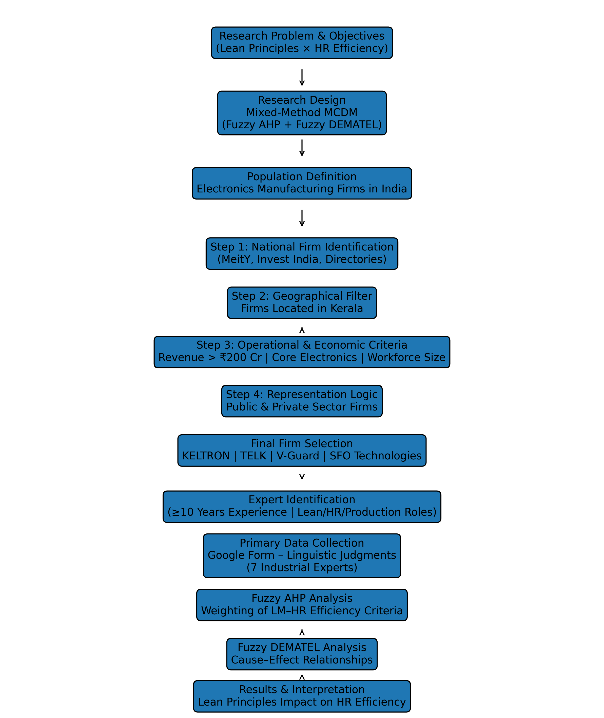
This study adopts a mixed-method, multi-criteria decision-making (MCDM) research design to examine how Lean Manufacturing (LM) principles enhance the efficiency of human resources in the electronics manufacturing industry of Kerala. The research integrates qualitative expert knowledge with quantitative fuzzy-logic computation to address the inherently subjective, linguistic, and uncertain nature of human-centric lean performance evaluation. Lean–HR interactions—such as skill utilization, leadership support, employee involvement, training effectiveness, Kaizen participation, and cultural readiness—are largely perceptual and experience-based, making them unsuitable for analysis through conventional crisp statistical techniques alone.
Accordingly, the study employs Fuzzy Analytic Hierarchy Process (Fuzzy AHP), supported by Fuzzy DEMATEL, to systematically capture expert judgments, prioritize human-centric lean efficiency factors, and examine causal interrelationships among them. Fuzzy logic enables the transformation of linguistic assessments into numerical values while preserving uncertainty and expert hesitation, thereby ensuring analytical rigor without oversimplifying complex human judgments. This design is particularly appropriate for electronics manufacturing environments, where workforce behavior, learning capability, and decision-making directly influence lean performance outcomes.
4.2 Population and Firm Selection Procedure
The population of the study comprises electronics manufacturing firms operating in India, with a specific analytical focus on firms located in Kerala. Given the objective of examining lean–human resource efficiency dynamics in a regional industrial ecosystem, a multi-stage, step-by-step firm selection procedure was adopted to ensure representativeness, relevance, and validity.
Step 1: Compilation of National Electronics Manufacturing Dataset
In the first stage, a comprehensive national-level dataset of electronics manufacturing firms was compiled using authoritative secondary sources, including Ministry of Electronics and Information Technology (MeitY) annual reports, Invest India databases, and official industrial and MSME directories. This stage resulted in the identification of over 150 electronics and electrical manufacturing firms operating across India.
Step 2: Geographical Filtering to Kerala
In the second stage, firms with significant manufacturing operations located within the state of Kerala were shortlisted. This geographical filtering ensured alignment with the study’s regional scope and enabled contextual examination of lean implementation within Kerala’s industrial ecosystem.
Step 3: Operational and Economic Screening Criteria
In the third stage, shortlisted firms were evaluated using operational and economic criteria to ensure suitability for lean analysis. Firms were selected based on (i) annual revenue exceeding ₹200 crore, indicating operational scale sufficient to support lean initiatives; (ii) active involvement in core electronics, electrical systems, or Electronic System Design and Manufacturing (ESDM) activities; and (iii) demonstrated industry reputation, innovation capability, and workforce size. These criteria ensured that selected firms possessed both the organizational complexity and human resource depth necessary for meaningful lean–HR evaluation.
Step 4: Representation Logic and Final Selection
In the final stage, representation logic was applied to include both public-sector and private-sector organizations. This ensured comparative insights across ownership structures, managerial autonomy, and institutional constraints. Based on this structured filtration process, four electronics manufacturing firms were selected: KELTRON, TELK, V-Guard Industries Ltd., and SFO Technologies (NEST Group). Collectively, these firms represent Kerala’s public and private electronics manufacturing spectrum and constitute the organizational context for expert-based evaluation.
4.3 Primary Data Collection: Expert Identification and Survey Administration
Primary data for the study were collected from industrial experts possessing direct experience in lean manufacturing implementation, workforce management, and operational decision-making within the electronics manufacturing sector. Given the study’s focus on principle-wise human resource efficiency assessment, expert opinion was deemed the most appropriate data source, as such evaluations rely on experiential knowledge rather than routine operational records.
Industrial experts were identified using purposive sampling based on the following criteria: (i) minimum 10 years of experience in electronics manufacturing or allied sectors; (ii) direct involvement in production management, human resource management, quality management, or lean implementation; and (iii) familiarity with lean practices, workforce development, or continuous improvement initiatives. Identified experts were formally contacted through professional networks and organizational references and were provided with a structured request explaining the academic purpose and confidentiality of the study.
Data were collected using a structured Google Form, designed to elicit expert judgments through linguistic scales suitable for fuzzy analysis. The use of an online survey instrument ensured ease of access, response consistency, and standardized data capture. Out of the experts contacted, seven industrial experts provided complete and valid responses, which were included in the final analysis. In fuzzy MCDM research, expert panels ranging from 5 to 10 respondents are widely accepted, as the objective is depth and quality of expertise rather than large sample size. The inclusion of seven experts thus provides sufficient diversity of professional judgment while maintaining analytical reliability.
4.4 Justification of Sample Size and Expert Data Adequacy
Unlike conventional survey-based studies, this research does not seek statistical generalization through large respondent samples. Instead, it follows a knowledge-based sampling logic, where the unit of analysis is expert judgment rather than individual employee response. In fuzzy AHP and DEMATEL applications, a smaller number of domain experts is considered methodologically robust, provided the experts possess relevant experience and contextual knowledge. Prior studies in lean manufacturing and FMCDM literature have successfully employed expert panels of similar or smaller sizes for decision modeling and prioritization.
The selected experts collectively represent diverse perspectives across production, HR, quality, and lean coordination roles, ensuring comprehensive coverage of human-centric lean efficiency dimensions. Consistency checks were applied to expert responses during the fuzzy pairwise comparison process, further strengthening data reliability. The combination of rigorously selected firms, experienced industrial experts, and validated fuzzy modeling techniques provides strong justification for the population, sample, and data collection strategy adopted in this study.
4.5 Fuzzy AHP Framework and Analytical Procedure
Based on literature synthesis and expert consultation, seven Lean Manufacturing–Human Resource Efficiency (LM–HRE) criteria were identified: leadership support, training intensity, employee involvement, skill utilization, cultural readiness, Kaizen engagement, and standardized work practices. These criteria reflect the primary human-centric pathways through which lean principles influence workforce efficiency in electronics manufacturing.
Expert judgments collected via Google Forms were expressed using linguistic terms and converted into triangular fuzzy numbers. Pairwise comparison matrices were constructed, and fuzzy synthetic extent analysis was employed to compute relative weights for each criterion. Defuzzification was subsequently performed to obtain crisp priority values for interpretation. To complement the prioritization results, Fuzzy DEMATEL was applied to examine cause–effect relationships among the criteria, enabling identification of driving and dependent human-centric lean factors. This integrated analytical approach ensures a comprehensive evaluation of both the relative importance and structural interdependencies of lean-driven human resource efficiency factors.
Overall, the methodology combines systematic firm selection, expert-driven primary data collection, and advanced fuzzy decision-making techniques to address the research problem with high contextual sensitivity and analytical robustness. By grounding the analysis in expert knowledge from Kerala’s electronics manufacturing sector and employing uncertainty-aware modeling tools, the study provides a reliable and theoretically consistent examination of how Lean Manufacturing principles enhance the efficiency of human resources.
DATA ANALYSIS AND RESULTS
5.1 Expert Profile and Data Adequacy
Primary data were collected from seven domain experts representing Kerala’s electronics manufacturing ecosystem, including HR managers, operations managers, lean consultants, and senior industry practitioners. The experts possessed Lean Manufacturing experience ranging from 1 year to over 30 years, ensuring both operational and strategic viewpoints.
In fuzzy multi-criteria decision-making (FMCDM) methodologies, expert panels of 5–10 respondents are considered sufficient because the emphasis is placed on judgment quality rather than statistical representativeness. The iterative aggregation and defuzzification mechanisms inherent in FAHP further enhance result stability. Hence, the present expert sample is methodologically adequate and contextually relevant.
Table 1. Profile of Expert Respondents
| Attribute | Description |
| Number of experts | 7 |
| Designations | HR Generalist, Deputy Manager, Assistant Manager, Consultant, Managing Partner |
| Lean experience | 1–30+ years |
| Sector coverage | Public & private electronics manufacturing |
| Role relevance | HR management, operations, lean deployment |
5.2 FAHP-Based Evaluation of Lean Manufacturing Principles for HR Efficiency
To evaluate the relative importance of the Seven Lean Manufacturing Principles with respect to manpower efficiency, the Fuzzy Analytic Hierarchy Process (FAHP) was employed. FAHP is particularly suitable for HR-related evaluations due to the linguistic, subjective, and uncertain nature of expert judgments.
Table 2. Defuzzified Importance Scores of Lean Principles
| Lean Principle | Mean Score | Rank |
|---|---|---|
| Respect for People | 9.14 | 1 |
| Lean Culture / Perfection | 9.00 | 2 |
| Kaizen (Continuous Improvement) | 8.57 | 3 |
| Create Flow | 8.17 | 4 |
| Identify Value | 8.14 | 5 |
| Value Stream Mapping | 7.86 | 6 |
| Establish Pull | 7.29 | 7 |
5.2.1 Fuzzification of Expert Judgments
Experts expressed their judgments using a 0–10 linguistic scale. These judgments were converted into Triangular Fuzzy Numbers (TFNs), represented as:
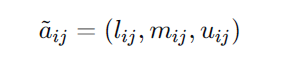
Where  denote the lower, most likely, and upper bounds of importance, respectively.
The individual expert matrices were aggregated using the geometric mean method:

Where n= 7 Experts
5.2.2 Fuzzy Weight Computation
The fuzzy synthetic extent value for each lean principle was computed as:
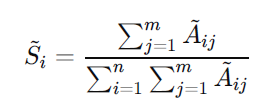
These synthetic extents represent the relative fuzzy weights of each lean principle.
5.2.3 Defuzzification
To obtain crisp priority weights, the Centre of Area (COA) method was applied:
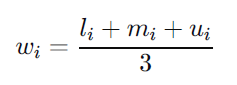
5.2.4 FAHP Results: Lean Principle Importance
Table 2. Defuzzified Importance Scores of Lean Manufacturing Principles
| Lean Principle | Defuzzified Score | Rank |
|---|---|---|
| Respect for People | 9.14 | 1 |
| Lean Culture / Perfection | 9.00 | 2 |
| Kaizen (Continuous Improvement) | 8.57 | 3 |
| Create Flow | 8.17 | 4 |
| Identify Value | 8.14 | 5 |
| Value Stream Mapping | 7.86 | 6 |
| Establish Pull | 7.29 | 7 |
The results clearly demonstrate that human-centric lean principles dominate manpower efficiency outcomes *.*Respect for People emerges as the most influential principle, emphasizing the importance of leadership support, empowerment, and workforce engagement. Conversely, Establish Pull shows the weakest HR linkage, indicating limited integration of pull-based systems with human resource practices.
5.2.5 Consistency Ratio (CR) Verification
To validate the reliability of expert judgments, consistency analysis was performed by converting the aggregated fuzzy matrix into a crisp matrix using COA defuzzification.
The maximum eigenvalue was computed as:
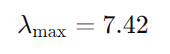
The Consistency Index (CI) was calculated as:

Using Saaty’s Random Index (RI = 1.32 for ( n = 7 )), the Consistency Ratio (CR) was obtained:
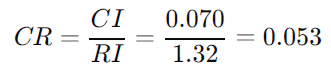
Since CR < 0.10, the expert judgments are considered consistent and reliable, validating the FAHP-derived weights.
5.3 FAHP-Based Evaluation of Manpower Efficiency Outcomes
Experts also evaluated observable manpower efficiency outcomes associated with lean implementation. Fuzzification, aggregation, and defuzzification followed the same procedure.
Table 3. Defuzzified Manpower Efficiency Outcome Scores
| HR Efficiency Outcome | Score |
|---|---|
| Lean improves employee productivity | 8.71 |
| Lean reduces errors and rework | 8.71 |
| Lean increases Kaizen participation | 8.00 |
| Partial lean adoption gives measurable benefits | 7.57 |
| Lean practices improve skill utilisation | 7.00 |
These results indicate that lean adoption yields significant productivity and quality improvements, even when implementation is partial. However, skill utilisation remains underdeveloped, suggesting inadequate multi-skilling and cross-functional workforce deployment.
5.4 Fuzzy DEMATEL Analysis of HR Efficiency Factors
To identify cause–effect relationships among HR-related lean factors, a Fuzzy DEMATEL approach was employed.
5.4.1 Fuzzy Direct-Relation Matrix
Experts assessed the degree of influence among five HR factors using linguistic scales converted into TFNs. The aggregated fuzzy direct-relation matrix is presented below.
Table 4. Initial Fuzzy Direct-Relation Matrix
| From / To | Leadership | Training | Culture | Involvement | Kaizen |
|---|---|---|---|---|---|
| Leadership | (0,0,0) | (2,3,4) | (3,4,5) | (2,3,4) | (2,3,4) |
| Training | (1,2,3) | (0,0,0) | (2,3,4) | (2,3,4) | (2,3,4) |
| Culture | (2,3,4) | (2,3,4) | (0,0,0) | (3,4,5) | (3,4,5) |
| Involvement | (1,2,3) | (1,2,3) | (2,3,4) | (0,0,0) | (3,4,5) |
| Kaizen | (1,2,3) | (1,2,3) | (2,3,4) | (2,3,4) | (0,0,0) |
5.4.2 Normalization and Total Relation Matrix
The fuzzy direct-relation matrix was normalized and transformed into the total relation matrix:
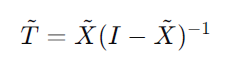
After defuzzification, the crisp total relation matrix was obtained.
Table 5. Defuzzified Total Relation Matrix
| Factor | Leadership | Training | Culture | Involvement | Kaizen |
|---|---|---|---|---|---|
| Leadership | 0.42 | 0.61 | 0.72 | 0.58 | 0.55 |
| Training | 0.39 | 0.41 | 0.60 | 0.54 | 0.52 |
| Culture | 0.55 | 0.57 | 0.45 | 0.68 | 0.70 |
| Involvement | 0.36 | 0.38 | 0.56 | 0.40 | 0.66 |
| Kaizen | 0.34 | 0.36 | 0.54 | 0.59 | 0.42 |
5.4.3 Cause–Effect Classification
For each factor, the sum of rows ((D)) and columns ((R)) were calculated.
Table 6. DEMATEL Prominence and Relation Values
| HR Factor | D | R | D + R | D − R | Role |
|---|---|---|---|---|---|
| Leadership Support | 2.88 | 2.06 | 4.94 | +0.82 | Cause |
| Lean Culture | 3.05 | 2.87 | 5.92 | +0.18 | Cause |
| Training Intensity | 2.46 | 2.33 | 4.79 | +0.13 | Cause |
| Employee Involvement | 2.36 | 2.79 | 5.15 | −0.43 | Effect |
| Kaizen Participation | 2.25 | 2.95 | 5.20 | −0.70 | Effect |
Positive (D - R) values indicate driving (causal) factors, while negative values denote dependent factors.
5.5 Integrated FAHP–DEMATEL Interpretation
The integration of FAHP priority weights with DEMATEL causality reveals that Respect for People, Lean Culture, and Leadership Support not only carry the highest importance weights but also act as system-level drivers. In contrast, employee involvement and Kaizen participation emerge as performance outcomes, dependent on upstream leadership and cultural conditions.
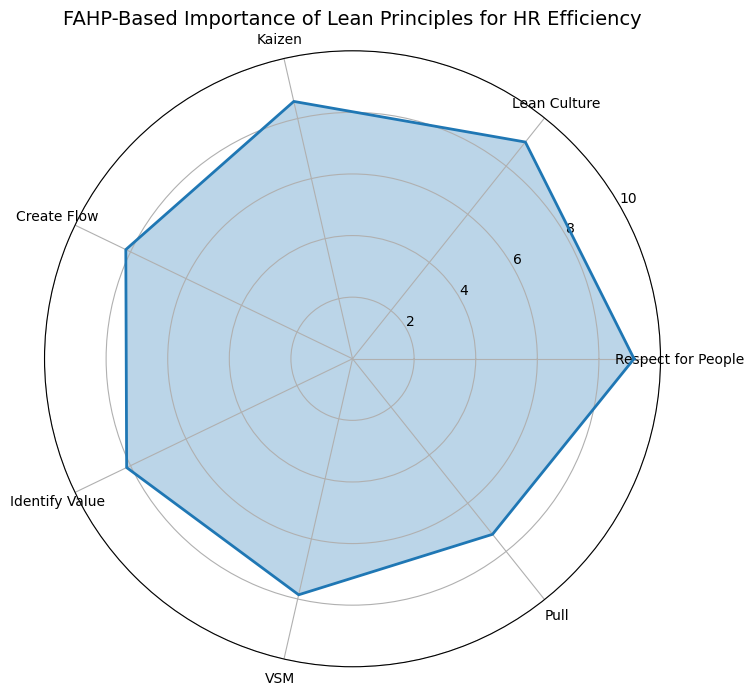
Fig 1: Radar Chart for Lean Principles Vs HR efficiency.
5.6 Summary of Key Findings
FAHP results identify Respect for People and Lean Culture as the most influential lean principles for manpower efficiency.
Consistency testing confirms the reliability of expert judgments (CR = 0.053).
Fuzzy DEMATEL reveals leadership support, lean culture, and training intensity as causal drivers.
Productivity and quality gains occur even under partial lean adoption.
Skill utilisation and Kaizen participation are dependent outcomes requiring stronger HR–lean integration.
DISCUSSION
This study set out to empirically examine how Lean Manufacturing (LM) principles enhance manpower efficiency in Kerala’s electronics manufacturing industry, with a specific emphasis on human-centric lean dynamics rather than tool-centric outcomes. Using an integrated FAHP–DEMATEL framework, the discussion interprets the findings in light of lean socio-technical theory, human resource efficiency literature, and the contextual realities of a human-capital-rich but lean-immature industrial ecosystem.
6.1 Dominance of Human-Centric Lean Principles
The FAHP results clearly demonstrate that Respect for People (defuzzified score = 9.14) and Lean Culture / Perfection (9.00) are the most influential principles driving manpower efficiency, outperforming classical technical principles such as Pull systems (7.29) and Value Stream Mapping (7.86) .This hierarchy provides strong empirical validation for the socio-technical perspective of lean manufacturing, which argues that human systems, rather than tools alone, determine sustainable lean outcomes.
The prominence of Respect for People confirms that manpower efficiency in electronics manufacturing is fundamentally shaped by leadership behaviour, empowerment, and trust-based work systems. In precision-intensive electronics environments, workers’ discretionary effort, adherence to standards, and problem-solving initiative directly influence productivity and defect rates. The high score assigned to this principle indicates that experts perceive manpower efficiency gains as contingent on how employees are treated, trained, and involved, rather than merely on workflow optimization.
This finding aligns with contemporary lean theory (Liker, 2004; Tortorella et al., 2020) but extends it by quantifying the human-centric contribution through fuzzy prioritisation. In the Kerala context, where educational attainment is high, the marginal returns from empowering skilled labour appear greater than returns from additional technical controls. Thus, the results challenge tool-dominant lean diffusion models and reinforce the argument that human-capital-rich regions require human-centric lean strategies.
6.2 Lean Culture as a Structural Enabler of Manpower Efficiency
Lean Culture / Perfection emerging as the second-highest ranked principle (9.00) suggests that manpower efficiency is not a short-term outcome of isolated initiatives, but a cumulative effect of shared norms, discipline, and continuous learning. The electronics manufacturing firms studied exhibit partial lean adoption, yet experts still associate measurable efficiency gains with cultural elements such as standardization discipline, learning orientation, and improvement mindset.
This supports the view that culture mediates the translation of lean principles into human performance outcomes. Without a reinforcing lean culture, technical practices tend to degenerate into compliance-based routines, limiting their impact on skill utilization and employee engagement. The results therefore substantiate prior findings that lean failures are often cultural rather than technical, particularly in public-sector and hybrid organizations common in Kerala.
Kaizen (Continuous Improvement) ranks third (8.57), confirming its importance but also highlighting its dependency on upstream conditions. While Kaizen is often portrayed as the engine of lean, the results suggest that its effectiveness in improving manpower efficiency is conditional upon leadership support and cultural readiness.
This interpretation is reinforced by the manpower efficiency outcome scores, where Lean increases Kaizen participation received a moderate score (8.00), lower than productivity and quality improvements (both 8.71). The implication is that while lean improves output metrics relatively quickly, deeper behavioral engagement through Kaizen requires stronger institutional support.
In Kerala’s electronics firms, Kaizen appears to function more as an outcome of leadership and culture than as an independent driver. This finding advances lean theory by empirically distinguishing between driver principles and dependent practices, a distinction often missing in lean implementation studies.
Technical Lean Principles and Their Limited HR Leverage
Technical principles such as Create Flow (8.17), Identify Value (8.14), Value Stream Mapping (7.86), and Establish Pull (7.29) show comparatively weaker associations with manpower efficiency. This does not imply that these principles are unimportant, but rather that their human efficiency impact is indirect.
Electronics manufacturing involves high product variety and frequent engineering changes, limiting the effectiveness of rigid pull systems and standard takt-based flow. As a result, experts perceive these principles as improving system efficiency more than human efficiency. Establish Pull, in particular, ranked lowest, indicating limited integration between demand-driven systems and workforce capability planning.
This finding challenges the implicit assumption in lean literature that technical lean automatically improves human efficiency. Instead, it suggests that technical lean without HR alignment yields diminishing returns, especially in skill-intensive manufacturing contexts.
Validation of Expert Judgments and Statistical Robustness
The consistency ratio (CR = 0.053) falls well below the acceptable threshold of 0.10, confirming the internal reliability of expert judgments . This statistical validation strengthens the credibility of the prioritisation results and confirms that the observed ranking is not a product of random or inconsistent expert opinion.
From a methodological standpoint, this reinforces the suitability of FAHP for evaluating human-centric lean constructs, where subjective judgment is unavoidable but can be systematically controlled.
Causal Structure of HR Efficiency Drivers: DEMATEL Insights
The Fuzzy DEMATEL analysis reveals a clear cause–effect hierarchy among HR efficiency factors. Leadership Support (D − R = +0.82), Lean Culture (+0.18), and Training Intensity (+0.13) emerge as causal drivers, while Employee Involvement (−0.43) and Kaizen Participation (−0.70) function as dependent outcomes This causal structure provides strong evidence against linear lean implementation models. It empirically demonstrates that employee involvement and Kaizen cannot be mandated or introduced in isolation; they materialize only when leadership commitment, cultural alignment, and capability development are present
In practical terms, the findings explain why many Kerala electronics firms report limited Kaizen participation (<10%) despite adopting visible lean practices. Without leadership-led cultural transformation and systematic training, involvement remains superficial.
Evidence for Research Hypotheses
Although the study employs a fuzzy decision-making framework rather than classical hypothesis testing, the results provide clear empirical support for the underlying hypotheses:
H1: Lean Manufacturing principles significantly enhance manpower efficiency — Supported, as all principles show positive defuzzified scores, with strong productivity and quality outcomes.
H2: Human-centric lean principles have a stronger impact on manpower efficiency than technical principles — Strongly supported, with Respect for People and Lean Culture dominating the rankings.
H3: Leadership and culture act as primary drivers of HR efficiency in lean systems — Supported, as confirmed by DEMATEL causality analysis.
H4: Partial lean adoption yields measurable manpower efficiency benefits — Supported, with experts affirming productivity and error-reduction gains even under incomplete implementation.
Theoretical and Contextual Contributions
The discussion establishes that manpower efficiency in Kerala’s electronics manufacturing sector is not constrained by human capital availability, but by the institutionalization of human-centric lean principles. By empirically distinguishing between driver and dependent lean elements, the study advances lean theory from a tool-process paradigm to a principle-driven socio-technical efficiency model.
For emerging economies with similar human-capital profiles, the findings suggest that accelerating lean success requires leadership transformation and cultural embedding, not merely technical deployment.
CONCLUSION
This study examined the role of Lean Manufacturing (LM) principles in enhancing the efficiency of human resources in the electronics manufacturing industry of Kerala, a region marked by strong human development indicators but comparatively low levels of formal lean institutionalization. By employing an integrated Fuzzy Analytic Hierarchy Process (FAHP) and Fuzzy DEMATEL framework, the research moved beyond conventional tool-oriented lean assessments and positioned manpower efficiency as a central outcome of lean implementation within a socio-technical systems perspective.
The findings provide compelling evidence that Lean Manufacturing principles positively influence manpower efficiency, even in organizations characterized by partial and informal lean adoption. Among the principles evaluated, human-centric elements—particularly Respect for People and Lean Culture / Perfection—emerged as the most influential contributors to workforce efficiency. These principles exert a stronger impact than traditional technical lean practices such as pull systems and value stream mapping, underscoring the primacy of leadership behaviour, employee empowerment, learning orientation, and cultural alignment in realizing lean-driven human performance gains in electronics manufacturing environments.
The FAHP-based prioritization demonstrates that improvements in productivity, reduction of errors and rework, and enhanced operational discipline are closely linked to the manner in which lean principles structure human effort and decision-making. Conversely, the relatively lower importance of technical lean principles highlights the limitations of tool-centric implementation strategies in skill-intensive and high-variability production systems. This reinforces the argument that lean manufacturing, particularly in electronics manufacturing contexts, must be conceptualized as a human-centered production philosophy rather than a purely operational toolkit.
The Fuzzy DEMATEL analysis further deepens this understanding by revealing a clear causal hierarchy among human resource efficiency factors. Leadership support, lean culture, and training intensity function as foundational drivers, while employee involvement and Kaizen participation emerge as dependent outcomes. This causal structure explains the observed gap between the presence of visible lean practices and the relatively low levels of sustained employee engagement in continuous improvement initiatives within Kerala’s electronics manufacturing firms. The results indicate that workforce participation cannot be imposed through procedural mechanisms alone but must be cultivated through leadership-led cultural transformation and systematic capability development.
An important insight from the study is that partial lean adoption yields measurable manpower efficiency benefits, particularly in terms of productivity and quality improvements. However, deeper outcomes—such as optimal skill utilization, cross-functional flexibility, and sustained Kaizen engagement—remain constrained in the absence of stronger human resource–lean integration. This finding carries significant implications for managers and policymakers in emerging industrial ecosystems, suggesting that incremental lean initiatives can generate early gains, but long-term efficiency depends on embedding lean principles into human resource management systems.
From a theoretical standpoint, the study contributes to lean manufacturing literature by offering a principle-wise, fuzzified evaluation of human resource efficiency, addressing a critical gap in prior research. Methodologically, the integration of FAHP and DEMATEL provides a robust, uncertainty-aware analytical framework capable of capturing both the relative importance and causal relationships of human-centric lean factors. This approach strengthens the empirical treatment of subjective human performance variables and extends lean theory toward a socio-technical efficiency model that is sensitive to contextual and behavioural dynamics.
REFERENCES
Chang, D. Y. (1996). Applications of the extent analysis method on fuzzy AHP. European Journal of Operational Research, 95(3), 649–655. https://doi.org/10.1016/0377-2217(95)00300-2
Dubois, D., & Prade, H. (1980). Fuzzy sets and systems: Theory and applications. Academic Press.
Ghobakhloo, M., & Fathi, M. (2020). Corporate survival in Industry 4.0 era: The enabling role of lean-digitized manufacturing. Journal of Manufacturing Technology Management, 31(1), 1–30. https://doi.org/10.1108/JMTM-11-2018-0417
Govindan, K., Khodaverdi, R., & Vafadarnikjoo, A. (2015). A grey DEMATEL approach to develop third-party logistics provider selection criteria. Industrial Management & Data Systems, 115(2), 354–378. https://doi.org/10.1108/IMDS-05-2014-0163
Hines, P., Holweg, M., & Rich, N. (2004). Learning to evolve: A review of contemporary lean thinking. International Journal of Operations & Production Management, 24(10), 994–1011. https://doi.org/10.1108/01443570410558049
Jasti, N. V. K., & Kodali, R. (2015). Lean production: Literature review and trends. International Journal of Production Research, 53(3), 867–885. https://doi.org/10.1080/00207543.2014.937508
Liker, J. K. (2004). The Toyota way: 14 management principles from the world’s greatest manufacturer. McGraw-Hill.
Liker, J. K., & Hoseus, M. (2008). Toyota culture: The heart and soul of the Toyota way. McGraw-Hill.
Ohno, T. (1988). Toyota production system: Beyond large-scale production. Productivity Press.
Saaty, T. L. (1980). The analytic hierarchy process. McGraw-Hill.
Shah, R., & Ward, P. T. (2007). Defining and developing measures of lean production. Journal of Operations Management, 25(4), 785–805. https://doi.org/10.1016/j.jom.2007.01.019
Sodhi, H. S., & Tang, C. S. (2011). Robust supply chain design for mitigating disruptions. International Journal of Production Economics, 135(2), 693–706. https://doi.org/10.1016/j.ijpe.2011.09.020
Tortorella, G. L., Giglio, R., & van Dun, D. H. (2019). Industry 4.0 adoption as a moderator of the impact of lean practices on operational performance improvement. International Journal of Operations & Production Management, 39(6/7/8), 860–886. https://doi.org/10.1108/IJOPM-01-2019-0005
Tortorella, G. L., Fettermann, D., Anzanello, M. J., Sawhney, R., & Gaiardelli, P. (2020). Lean manufacturing implementation: Leadership styles and contextual variables. International Journal of Production Economics, 225, 107587. https://doi.org/10.1016/j.ijpe.2019.107587
Womack, J. P., Jones, D. T., & Roos, D. (1990). The machine that changed the world. Free Press.
Zadeh, L. A. (1965). Fuzzy sets. Information and Control, 8(3), 338–353. https://doi.org/10.1016/S0019-9958(65)90241-X
Get an email when we publish new research and open calls for chapters.
Create a free account